
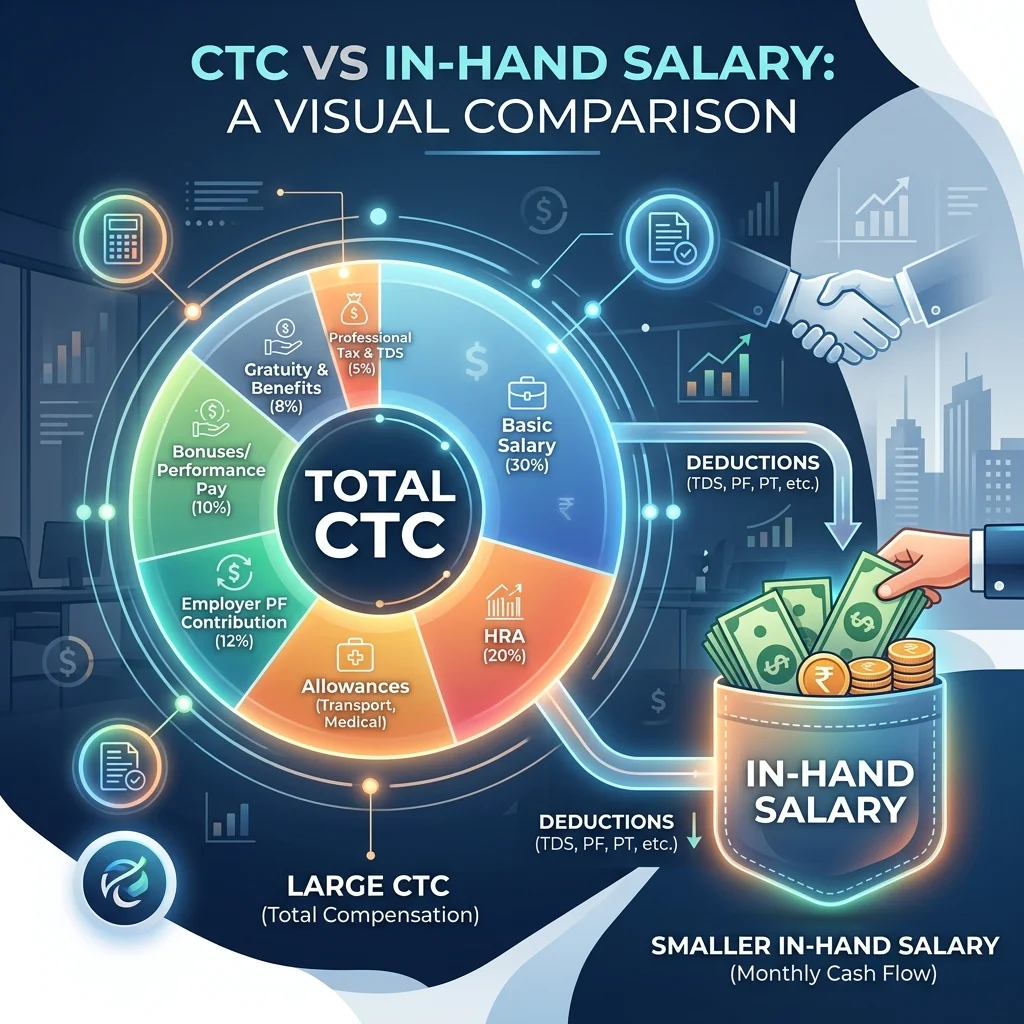
In-hand salary is lower than CTC because CTC includes non-cash perks, employer contributions (like EPF and gratuity), and variable pay, while take-home pay is calculated after deducting employee EPF share, Professional Tax, and Income Tax (TDS).
Introduction: The Mystery of the Missing Take-Home Pay
It is a common scenario: you receive a job offer letter stating a CTC of ₹10 Lakhs Per Annum (LPA). You expect to receive around ₹83,300 in your bank account every month. However, when the first paycheck arrives, the amount is only ₹68,000. Where did the missing money go?
This article breaks down the exact reasons why your in-hand salary is lower than your CTC, using regulations from the EPFO and Income Tax Department to explain the deductions.
1. Non-Cash and Indirect Benefits
Many components included in your CTC do not represent cash payments. These include group health insurance premiums, free office lunches, company-provided cab services, and laptop allowances. While these add value, they are deducted from your take-home pay.
2. Provident Fund (PF) Double Deductions
Your Provident Fund (EPF) account receives contributions from both you and your employer. In many CTC structures:
- The employer's 12% PF contribution is listed as part of the CTC (then deducted).
- Your employee 12% PF share is deducted directly from your gross salary.
This "double contribution" significantly reduces the monthly cash you receive in hand.
3. Gratuity Accrual
Gratuity is a lump sum paid to you when you leave a company after working there for at least 5 years. Even though you cannot access this money monthly, employers include the annual accrual value in your CTC package.
4. Taxes: Professional Tax and TDS
- Professional Tax (PT): A state-level tax (typically ₹200 per month in most Indian states).
- Tax Deducted at Source (TDS): The income tax deducted by your employer monthly based on your projected tax slab.
Deduction Breakdown Summary
| Deduction Category | Component Name | Impact on Cash Flow |
|---|---|---|
| Statutory Deductions | Employee EPF (12% of Basic) | Reduces take-home pay (goes to retirement account) |
| Tax Deductions | TDS (Income Tax) & PT | Paid directly to government accounts |
| Company Deductions | Employer EPF & Gratuity Allocation | Deducted from CTC to cover corporate liabilities |
Frequently Asked Questions
Why is my in-hand salary so much lower than my CTC?
Your in-hand salary is lower because CTC includes non-cash perks, employer retirement contributions (EPF, Gratuity), and variable pay, while your take-home is calculated after subtracting employee EPF shares and income tax (TDS).
How is TDS calculated on my monthly salary?
TDS is calculated by estimating your total annual income, applying tax exemptions (like HRA or Section 80C under the old regime), calculating the tax liability, and dividing it by 12 to deduct it monthly.
Can I opt out of EPF deductions to increase my in-hand salary?
Under EPFO rules, if your basic salary at your first job is under ₹15,000 per month, you can opt out by submitting Form 11. However, if your basic is higher, participation is mandatory.
What happens to the professional tax deducted from my salary?
Professional tax is a state-level tax collected by your employer and paid to the state government. It is capped at a maximum of ₹2,500 per year in India.
Is variable pay deducted from my in-hand salary?
Variable pay is not deducted; rather, it is withheld and paid out periodically (quarterly or annually) based on performance, meaning it is not part of your regular monthly take-home pay.
How can I reduce the tax deducted from my salary?
You can reduce TDS by choosing the right tax regime (Old vs. New) and submitting investment declarations (like tax-saving mutual funds, insurance, or rent receipts for HRA) to your HR department.
Senior Career Strategist & compensation analyst with 10+ years of recruitment research experience.
View Insights Home →